Updated 2026-09-27 · Global · General education
What changed: the money or what it buys?
A basket costing $100 today costs $103 next year. That is 3% inflation. If you still have $100 in your account, the number of dollars has not fallen. What those dollars can buy has changed.
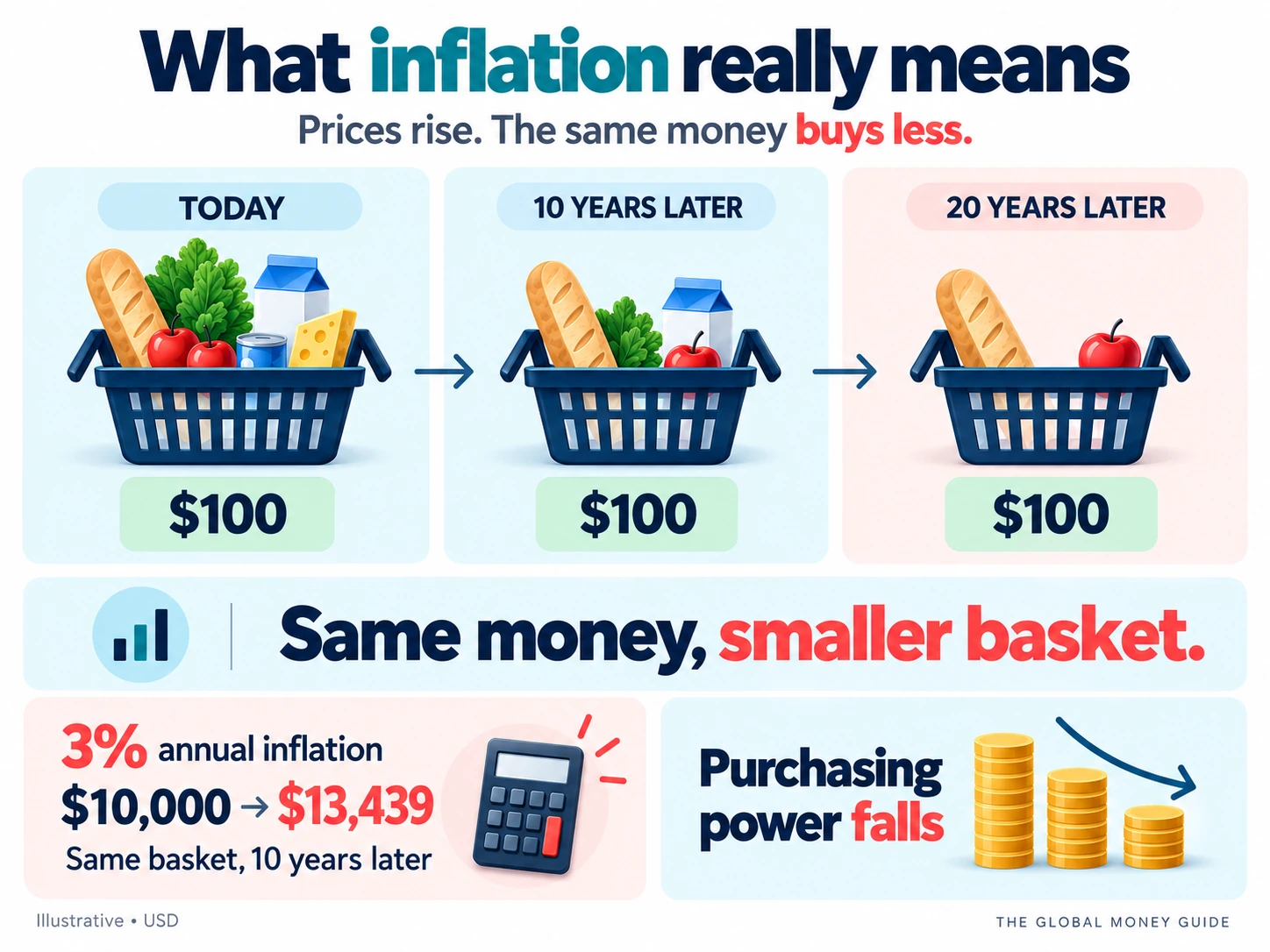
What inflation really means
Prices rise. The same money buys less. Illustrative, USD.
Compare what the same $100 buys today, 10 years later and 20 years later.
Illustrative example: the same basket costing $10,000 today costs $13,439 after 10 years at 3% annual inflation.
Same money, smaller basket.
Nominal value and purchasing power
Nominal value is the number on the statement. Purchasing power is the goods and services that number can pay for. Cash is useful for stability and access, but a long-term goal also needs a view on rising prices. Interest can offset some inflation; it is the relationship between the two that matters.
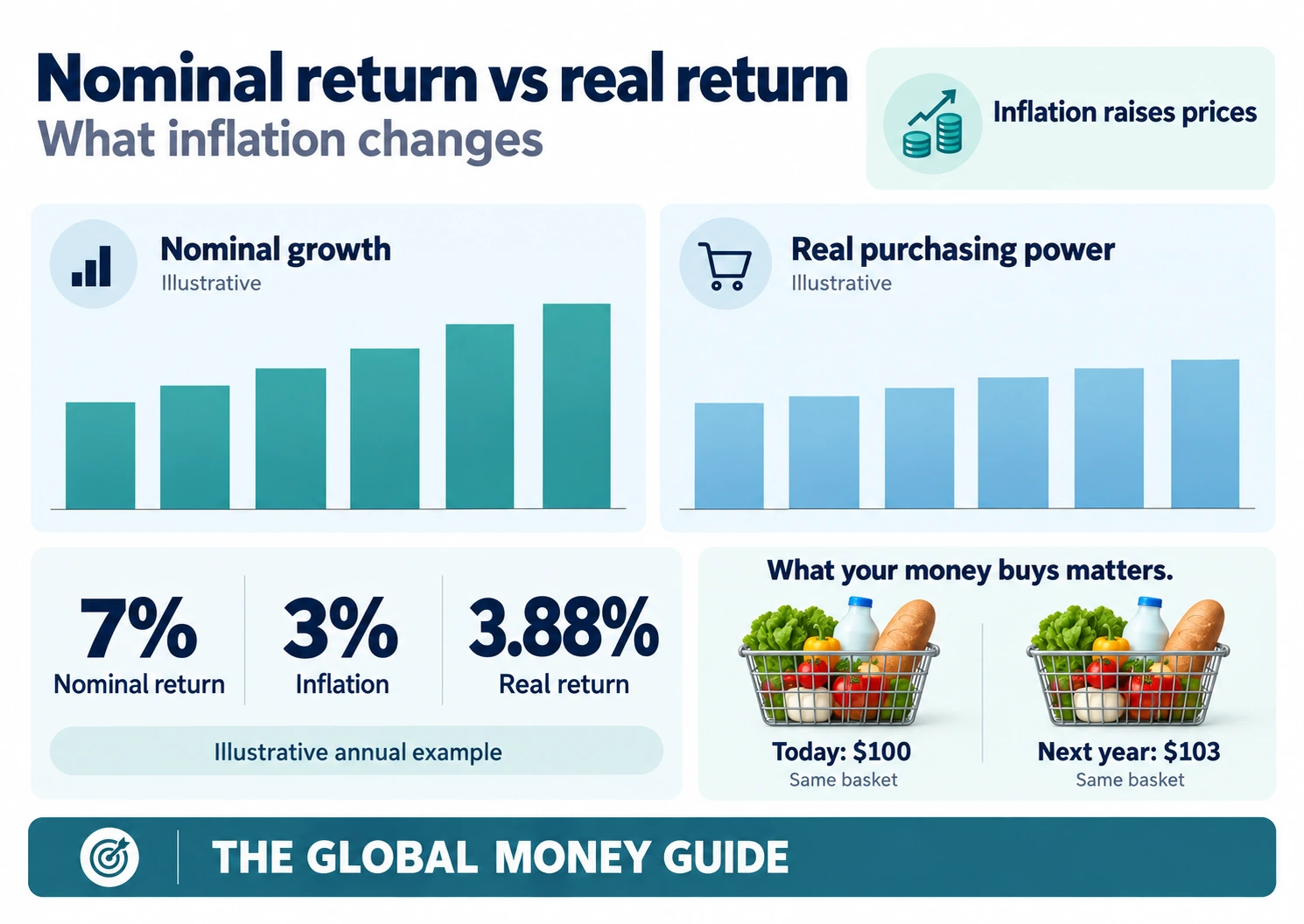
Nominal return vs real return
What inflation changes
Nominal growth — Illustrative
Real purchasing power — Illustrative
Illustrative annual example: 7% nominal return, 3% inflation, 3.88% real return.
Your own basket may change differently
Food, rent, school fees, travel and healthcare do not all rise at the same rate. Education planning separates tuition and living-cost inflation. Retirement planning links today’s monthly spending to a future income need.
Test a range
Use a lower and a higher inflation assumption as well as your starting estimate. This helps show which decisions are sensitive to rising costs without pretending to predict them.
For information and guidance only. Results are illustrative, based on your assumptions, and are not personalised financial advice. Methodology & limitations