
Updated 2026-09-27 · International / NRI families · General education
One family, more than one set of arrangements
Property in India, accounts abroad and employer shares can involve different administrators and legal systems. Start by recording what exists, who owns it and whom it is intended to support.

Create a usable family inventory
- Indian and overseas assets, legal owners and relevant documents.
- Current beneficiaries and nominations, and their effect under the specific arrangement.
- Wills and the people authorised to act in each jurisdiction.
- Accessible liquidity for dependants and administration.
- Employer shares, including the issuer and whether awards have become owned shares.
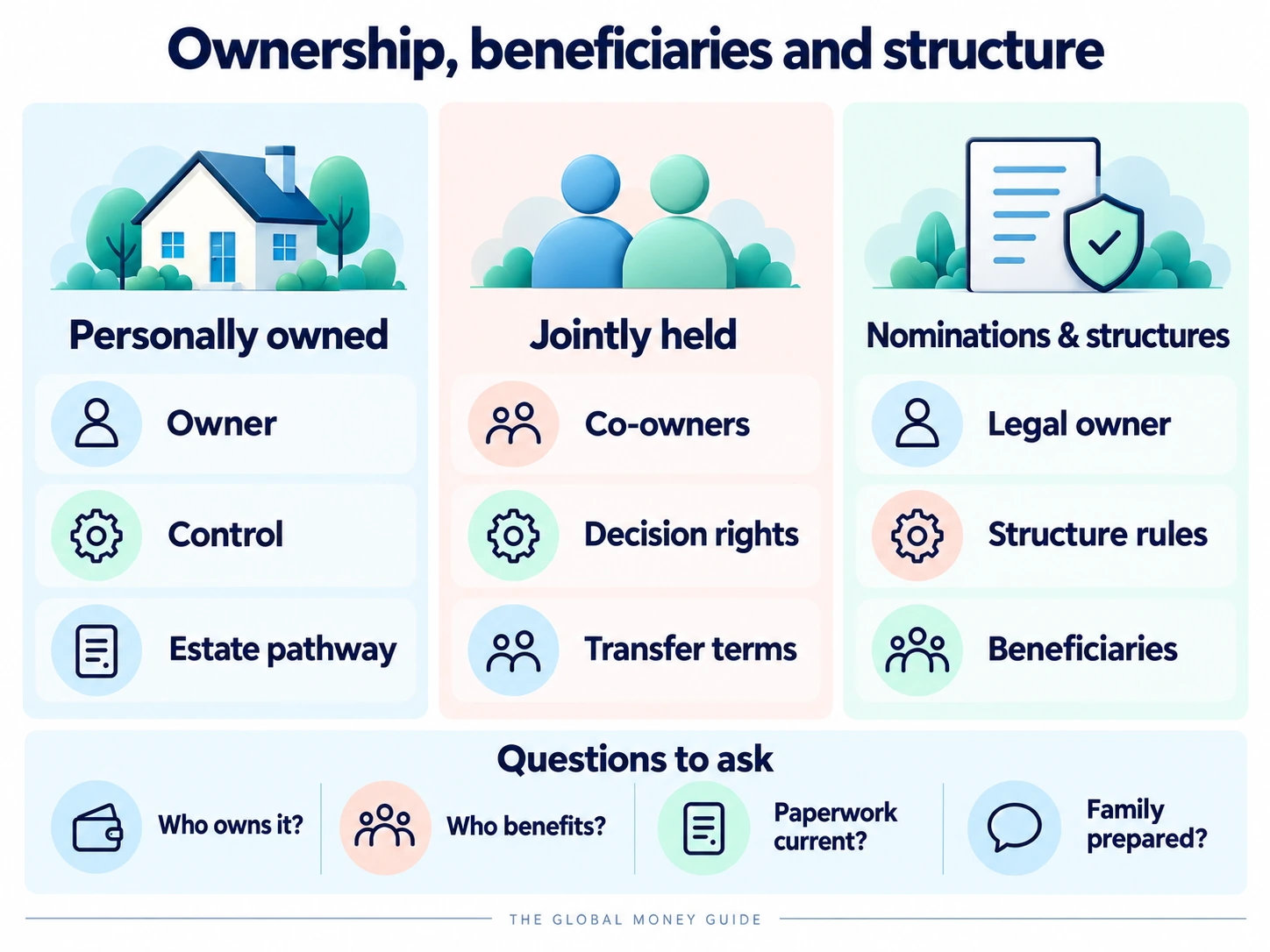
Ownership, beneficiaries and structure
Compare personally owned assets, jointly held assets, and nominations or structures.
Questions to ask
Coordinate the documents
Do not assume a nomination, joint account or one will resolves every asset. The effect of each depends on the asset, the governing law and family circumstances. Legal advisers in the relevant countries can coordinate documents and avoid inconsistencies.
Review before life changes
For information and guidance only. Results are illustrative, based on your assumptions, and are not personalised financial advice. Methodology & limitations