

Updated 2026-09-27 · Global · General education
Building wealth and transferring it are different jobs
A family may know the value of its investments yet have no shared record of who owns them, who is nominated or how the next generation could access them. Estate planning connects those practical questions.

Make the family’s arrangements understandable
| Planning job | Useful information |
|---|---|
| Ownership | Legal owners, account types, property titles and business interests |
| Beneficiaries and nominations | Intended recipients, current nominations and whether they are binding under the relevant arrangement |
| Liquidity | Money for household costs, administration, liabilities and any taxes while access is being resolved |
| Documents and decision-makers | Wills, powers of attorney or local equivalents, executors and secure records |
| Trusts where appropriate | Purpose, powers, administration, costs and jurisdiction-specific treatment |
A nomination, a will and joint ownership do not necessarily operate in the same way. Their effect depends on the asset and local law. Coordinate documents rather than assuming one form settles the whole estate.
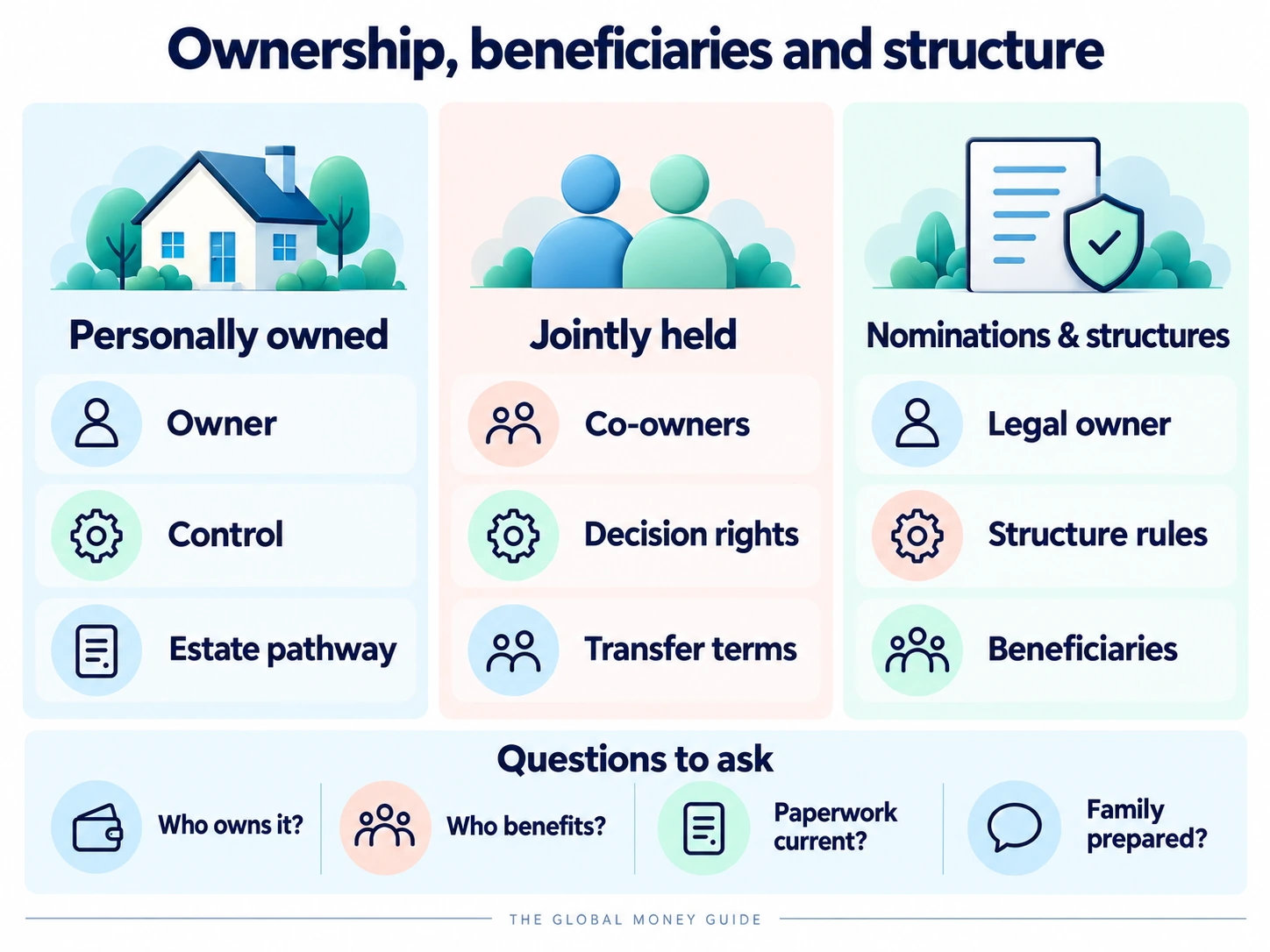
Ownership, beneficiaries and structure
Compare personally owned assets, jointly held assets, and nominations or structures.
Questions to ask
When the family crosses borders
Residence, citizenship where relevant, the location of assets and the form of ownership can create different succession and tax questions. Use qualified legal and tax advice for the countries involved. Start with a clear inventory so the specialist work answers the right questions.
A practical first step
For information and guidance only. Results are illustrative, based on your assumptions, and are not personalised financial advice. Methodology & limitations