

Updated 2026-09-27 · Global · General education
An investment account is a beginning, not a complete plan
Two people can hold similar investments through different arrangements. The useful question is which combination of ownership, administration, access and cost fits the goal and the countries involved.
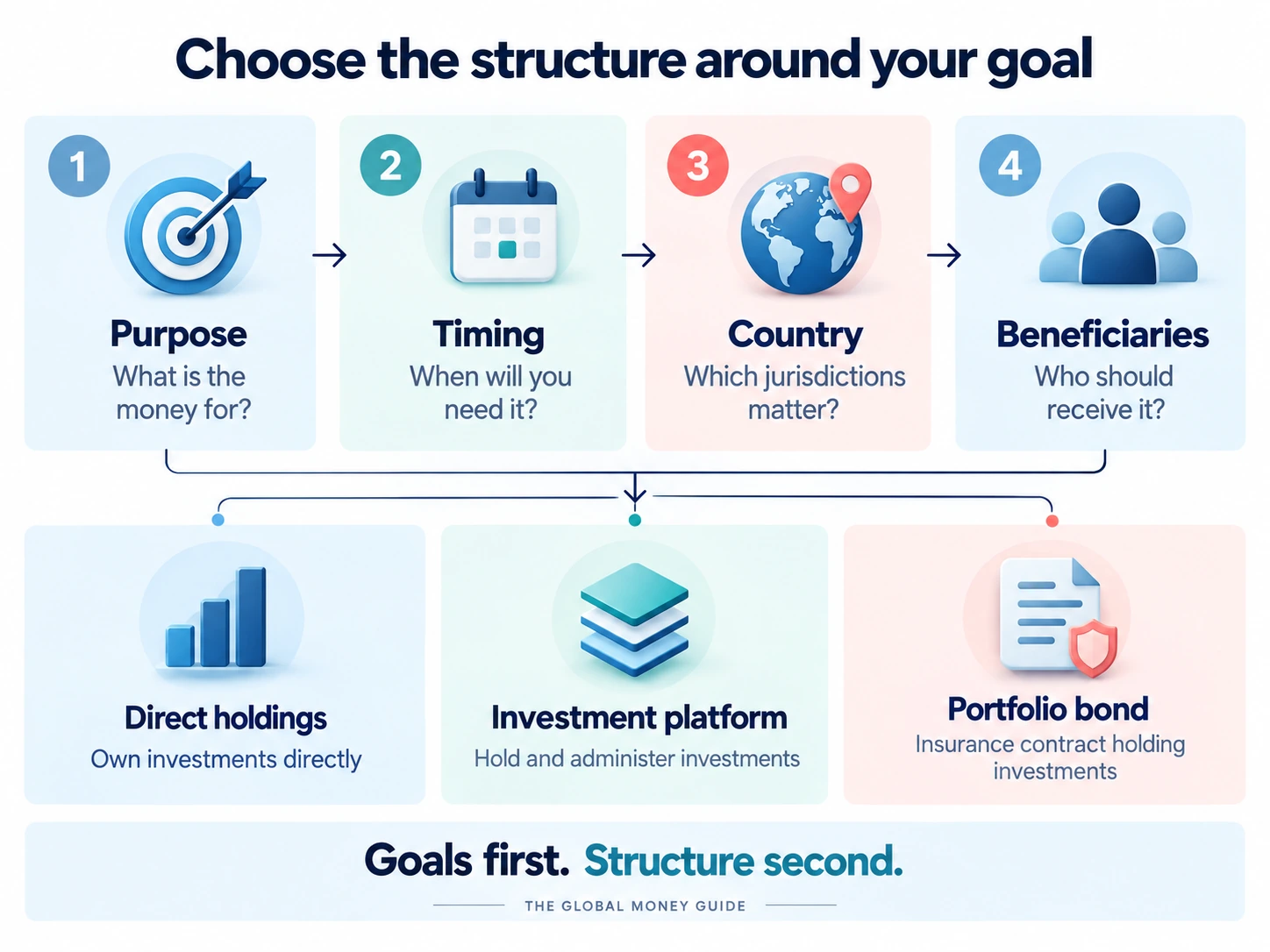
Choose the structure around your goal
Goals first. Structure second.
Legal ownership, beneficial ownership and custody
An investor may be the beneficial owner while a nominee is the registered legal owner. A custodian safeguards or administers assets under an agreement; that does not make all custody arrangements identical. Ask how client assets are segregated, what you can claim if an intermediary fails and which jurisdiction governs the agreement. A platform is a service, not a single legal wrapper.
Separate the investment from the legal structure
A fund, ETF, share portfolio or bond portfolio is the investment. A platform, brokerage account, pension, trust or insurance-based portfolio structure is the legal and administrative environment through which investments may be held. Similar investments can therefore sit inside very different structures.
- What do you legally own?
- Who is the custodian or legal owner of the underlying assets?
- What contractual rights do you have to withdraw, transfer or change investments?

Understand the main structural differences
A direct investment or brokerage account is usually designed to give the investor direct economic exposure to the securities held through the account or custody arrangement. An investment platform adds administration, dealing and consolidated reporting. An insurance-based portfolio structure is different again: the investor normally owns rights under an insurance contract while the insurer owns or controls the underlying assets within that contract.
Compare what each arrangement does
| Arrangement | What it may hold and who administers it | Why it may be used | What to compare |
|---|---|---|---|
| Direct investment / brokerage account | Permitted shares, bonds, funds or other securities; provider and custodian administer holdings | Direct access and control within available markets | Custody, dealing, tax reporting, access and succession |
| Investment platform | A selected investment range and consolidated administration | Portfolio organisation, reporting and dealing in one place | Platform charges, investment range, transfer and withdrawal terms |
| Portfolio bond | An insurance contract linked to permitted investments; insurer administers the contract | May provide tax-planning or administrative benefits depending on jurisdiction and circumstances | Legal ownership, policyholder rights, cost layers, surrender terms and beneficiary treatment |
| Pension | Investments permitted by the relevant retirement arrangement | Retirement saving under a particular legal and tax framework | Eligibility, contributions, access ages, benefits and cross-border treatment |
| Trust | Assets administered by trustees under the trust terms and relevant law | Defined ownership, control and succession objectives | Trustee duties, costs, beneficiaries and local recognition |
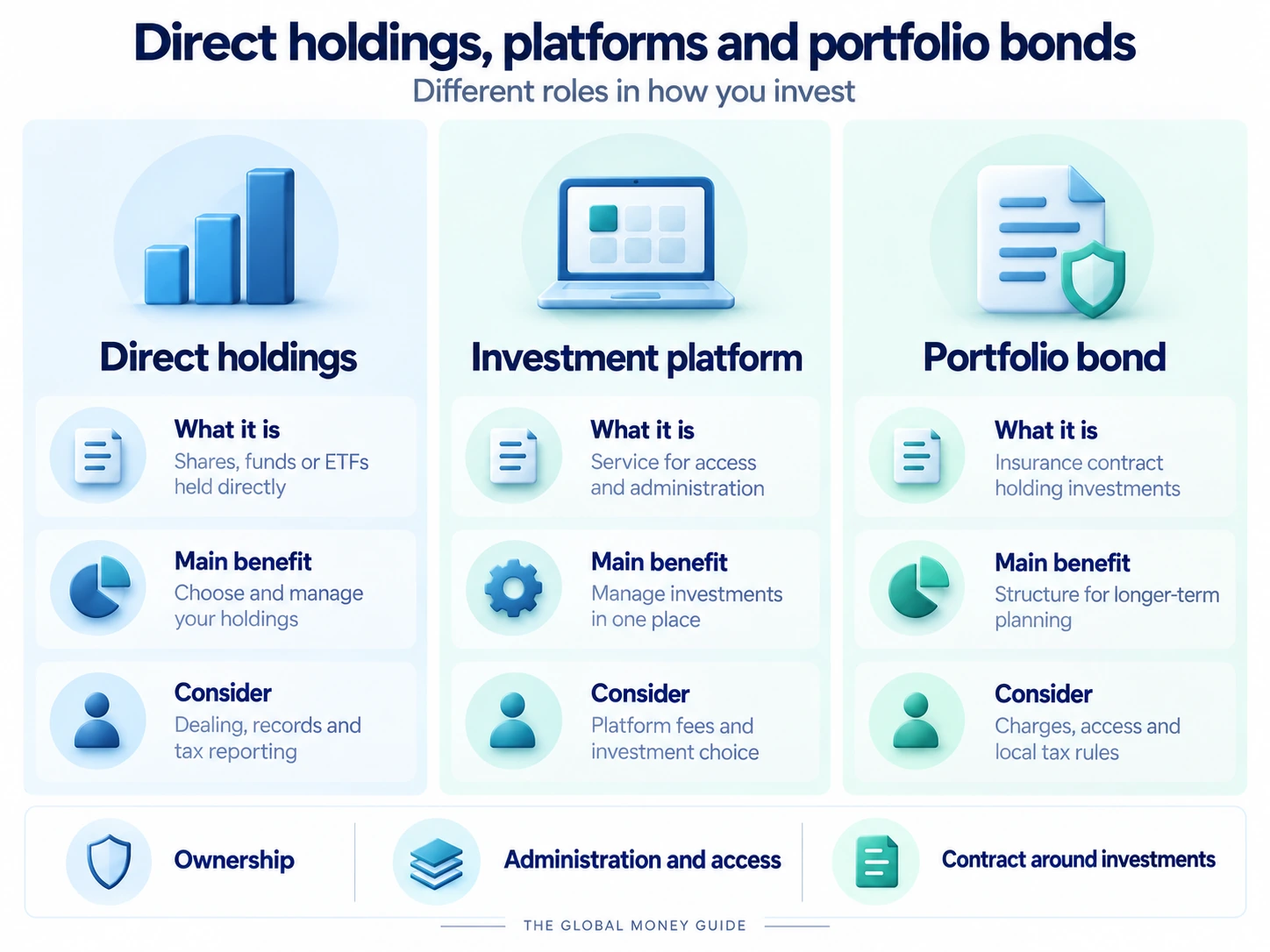
Direct holdings, platforms and portfolio bonds
Different roles in how you invest
Ownership
Administration and access
Contract around investments
Direct account / platform
- Typically clearer line of sight to individual holdings.
- Tax treatment normally follows the investor, account and local rules.
- Transferability and succession depend on the custodian and jurisdiction.
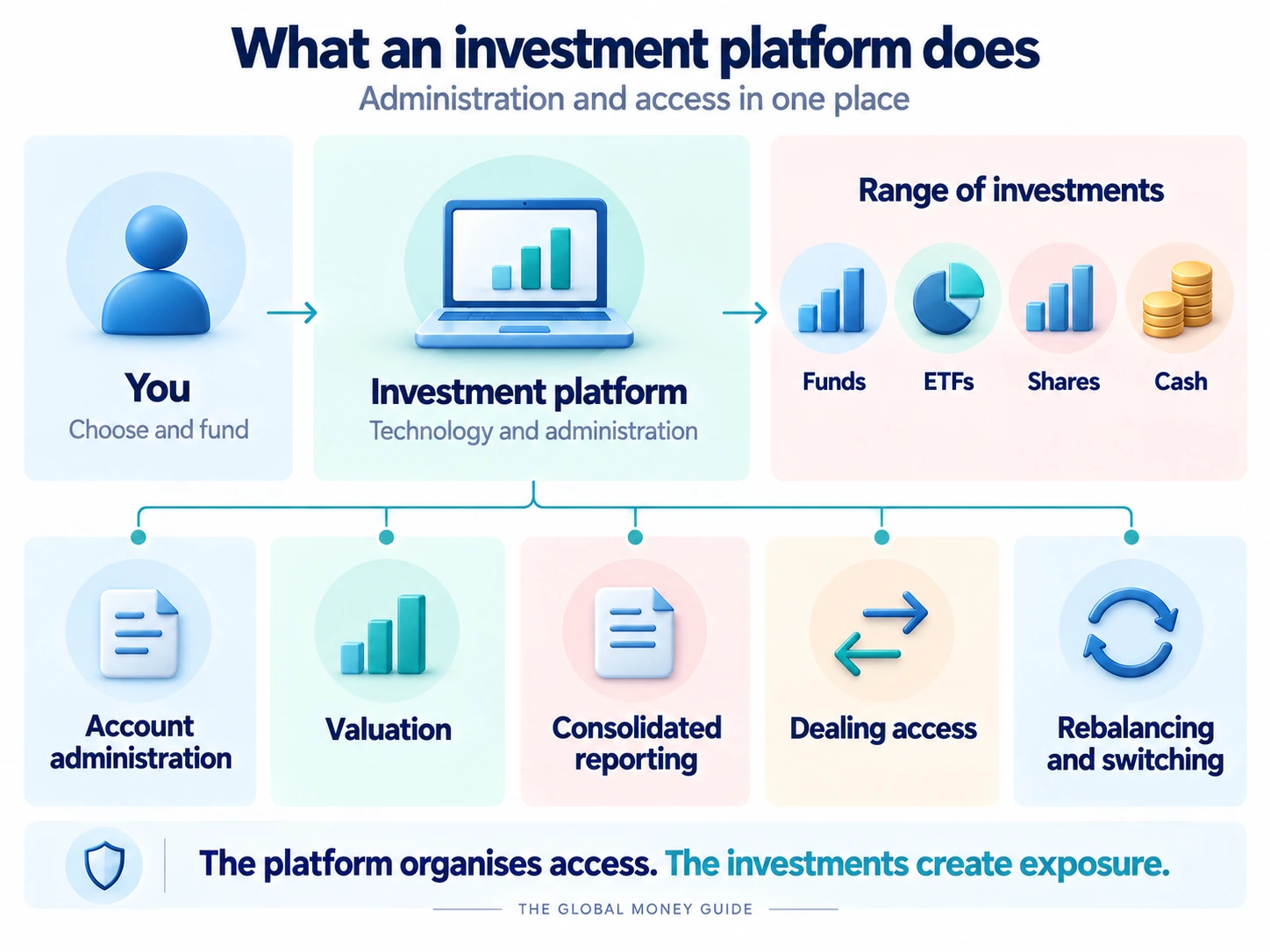
What an investment platform does
Administration and access in one place
You, then Investment platform, then Range of investments
The platform organises access. The investments create exposure.
Insurance-based structure
- The legal asset is generally the policy or contract.
- Tax deferral or estate treatment may differ by jurisdiction.
- Additional contractual rules, provider charges and access conditions may apply.
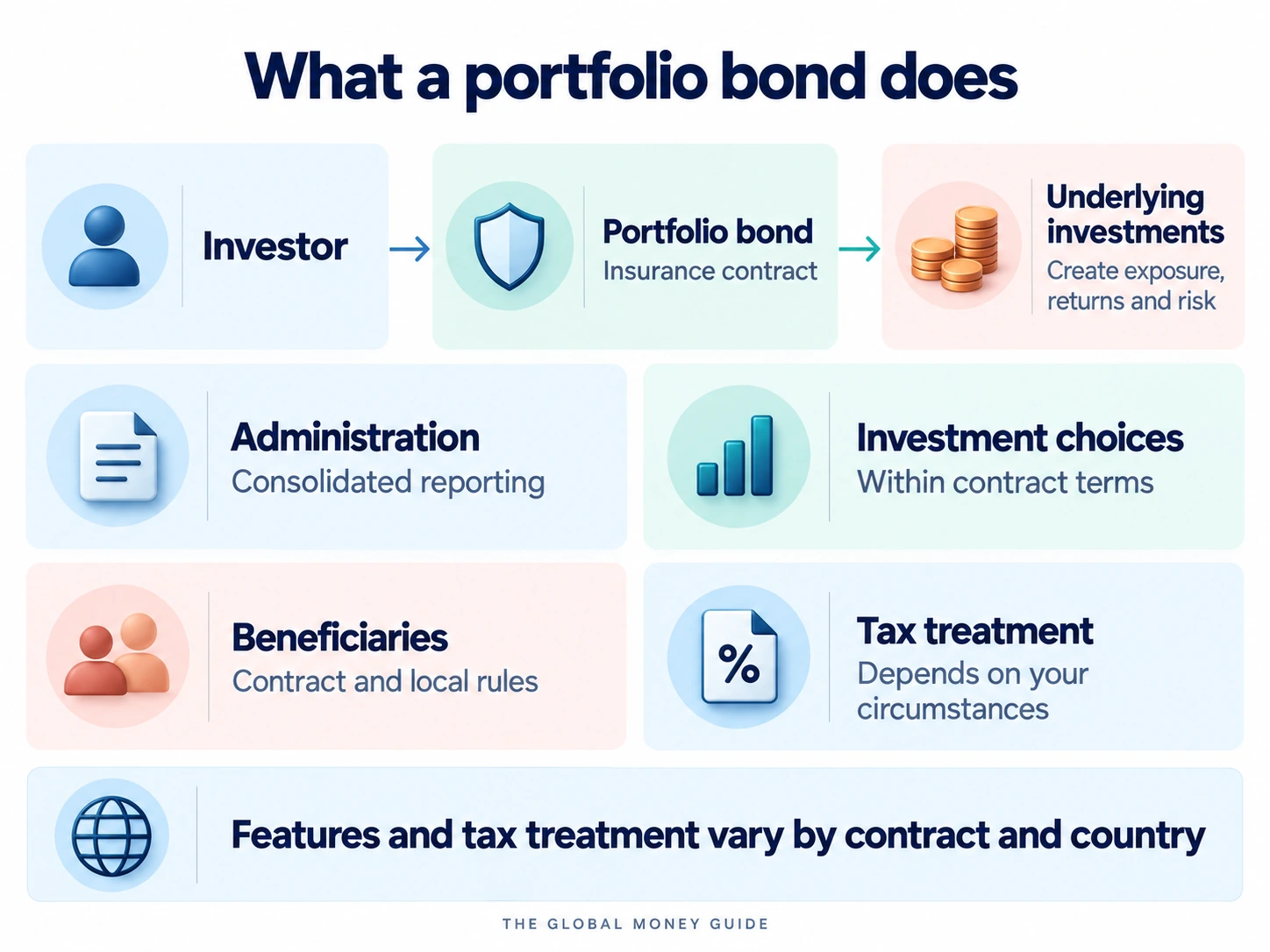
What a portfolio bond does
Investor, then Portfolio bond, then Underlying investments
Features and tax treatment vary by contract and country.
Compare the total cost, not one headline fee
International investment structures can contain several cost layers. Looking only at a platform charge or fund fee can give an incomplete picture.
- Product or policy charges.
- Platform, custody or administration fees.
- Fund or portfolio costs.
- Dealing, FX or transaction costs.
- Advice or servicing fees where applicable.
- Exit, transfer or early-access charges if the structure includes them.
The relevant comparison is the total expected cost over the period you expect to hold the structure, together with the value of any genuine tax, estate, administrative or planning benefits.
Liquidity and access matter
A long-term structure can look efficient on paper but be unsuitable if the investor may need the money sooner. Before committing capital, understand how withdrawals work, whether penalties or market-value adjustments can apply, what minimum balances must remain and how quickly money can realistically be accessed.
Cross-border treatment can change
A structure that is convenient in one country may be treated differently after a move. Tax residence, reporting, access, consumer protection and succession rules can all change. This is especially important for expatriates who may retire elsewhere or return home.
- Where are you resident now?
- Where might you live in five, ten or twenty years?
- Could your home country tax the structure differently when you return?
- Will the provider continue servicing residents of the future jurisdiction?

Ownership and succession deserve their own review
Do not assume that naming a beneficiary on a platform, policy or account solves every succession question. The answer can depend on the legal owner, nomination rules, probate or estate procedures, local forced-heirship rules, trusts, wills and the beneficiary's own jurisdiction.
The underlying portfolio still matters
Whatever the wrapper, diversification, risk level, time horizon, liquidity and investment costs still matter. A sophisticated legal structure cannot compensate for an unsuitable or excessively concentrated portfolio. Structure should support the financial plan rather than distract from it.
Questions to ask before choosing a structure
- What objective is the structure solving that a simpler account does not?
- What are the total costs over the expected holding period?
- How flexible is it if circumstances change?
- What happens if you move country?
- What happens on death or incapacity?
- Which tax or estate benefits are genuine, and in which jurisdiction?
- Can those benefits be lost if rules or residence change?
Review the whole arrangement
Sources and scope
Check the source period and personal residence history.
- HMRC — Unit-linked policies: investments and contractual ownership · Checked 2026-09-27 · UK; structural explanation only
- MoneyHelper — What are investment bonds? · Checked 2026-09-27 · UK; local tax rules are not universal
General information; does not establish individual eligibility, tax treatment or suitability.
For information and guidance only. Results are illustrative, based on your assumptions, and are not personalised financial advice. Methodology & limitations