

Updated 2026-09-27 · UK · General education
Organise the family picture first
Before calculating a possible liability, list the assets, their legal owners and the people they are intended to benefit. Residence history and UK connections help identify which rules need specialist attention.
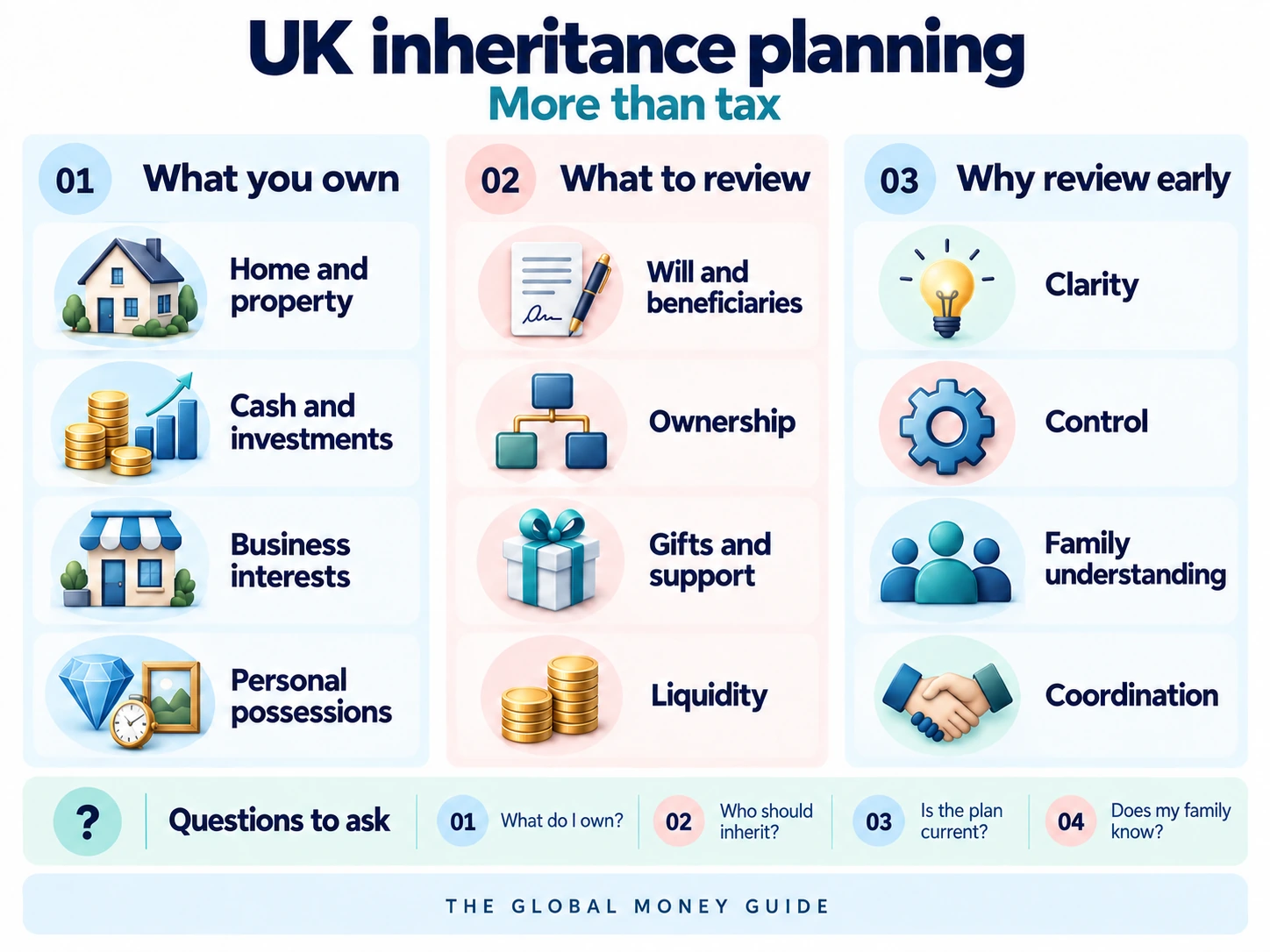
UK inheritance planning
More than tax
Review what you own, what needs attention and why an early review matters.
Questions to ask: What do I own? Who should inherit? Is the plan current? Does my family know?
Start with residence history, not only today’s address
For expatriates, the estate-planning question is not answered simply by where you live today. UK residence history, asset location, ownership and succession arrangements may all matter. The current UK inheritance-tax framework places greater emphasis on long-term residence history than the old domicile shorthand.
- Map UK tax-residence years over the relevant look-back period.
- Record the date of departure and any later UK residence.
- Identify which assets remain legally situated in the UK.
Separate UK assets from worldwide assets
UK property and other UK-situated assets can require separate analysis even when a person lives abroad. For some long-term residents, overseas assets may also remain relevant for a period after departure.
- Property and land.
- Direct investments and business interests.
- Pensions, trusts, life assurance and contractual investment structures.
Ownership and succession matter
Two portfolios with similar underlying investments may not have the same legal ownership. Wills, beneficiary nominations, trusts, corporate ownership and contractual structures can change administration and succession questions.
- Check wills across relevant jurisdictions.
- Review beneficiary nominations.
- Consider whether the estate has enough liquidity for tax, debts and administration.
Questions to take into a professional review
A useful review should connect residence history, asset location, ownership, family objectives and liquidity rather than focus on a single headline tax rate.
- What remains UK-situated?
- What may be caught because of residence history?
- What changes if you return to the UK?
- Who receives assets, in what jurisdiction and how quickly?
Pensions have a changing inheritance context
Finance Act 2026 brings most unused pension funds and pension death benefits into the inheritance-tax estate for deaths on or after 6 April 2027. Qualifying death-in-service benefits and other specified benefits are excluded. Residence, scheme location, beneficiaries and applicable exemptions matter; review the current HMRC technical notes for the specific arrangement.
Keep tax within the whole financial life
Sources and scope
UK residence-based inheritance framework from 6 April 2025; pension changes from 6 April 2027. Source checkpoint 27 September 2026; personal application and exceptions require review.
- HMRC — Inheritance Tax if you're a long-term UK resident · Checked 2026-09-27 · UK
- HMRC — Inheritance Tax on Pensions: Technical Note 2, 27 August 2026 · Checked 2026-09-27 · UK
General information; does not establish individual eligibility, tax treatment or suitability.
For information and guidance only. Results are illustrative, based on your assumptions, and are not personalised financial advice. Methodology & limitations